
Freezer Room Doors
Where failure is not an option. 100+ mm thick insulation and heated frame system against icing.
- Heated frame and threshold: prevents the seals from freezing on, so the door always remains openable.
- Extra thick panel: 100–140 mm polyurethane thermal insulation, with low thermal transmittance.
- Life-safety emergency release: with an internal release to ensure exit even in the event of lock-in.
The doors are designed for -25°C operation, where reliable closing, frost protection, and safety are simultaneously critical.
Choose a door type
Stainless steel cold storage hinged doors
Hermetic sealing for spaces above 0°C. For personnel traffic, with rising hinges.
Insulated sliding doors
Space-saving solution for large openings. Manual or automatic, for forklift traffic.
Stainless steel cold storage swing doors
Semi-insulated design for industrial corridors. Fast, barrier-free passage.
Freezer doors
For deep-freeze rooms (-25°C). Extra insulation and heated frame system against icing.
Why isn't a plain cold storage door enough?
Below minus 20 degrees, the laws of physics punish harder. The seal of a traditional cold storage door would freeze to the frame in minutes, making opening impossible and ruining the rubber.
The solution: We build an electric heating wire into the frame and threshold of our freezer doors, which continuously keeps the contact points warm, giving ice no chance to form.
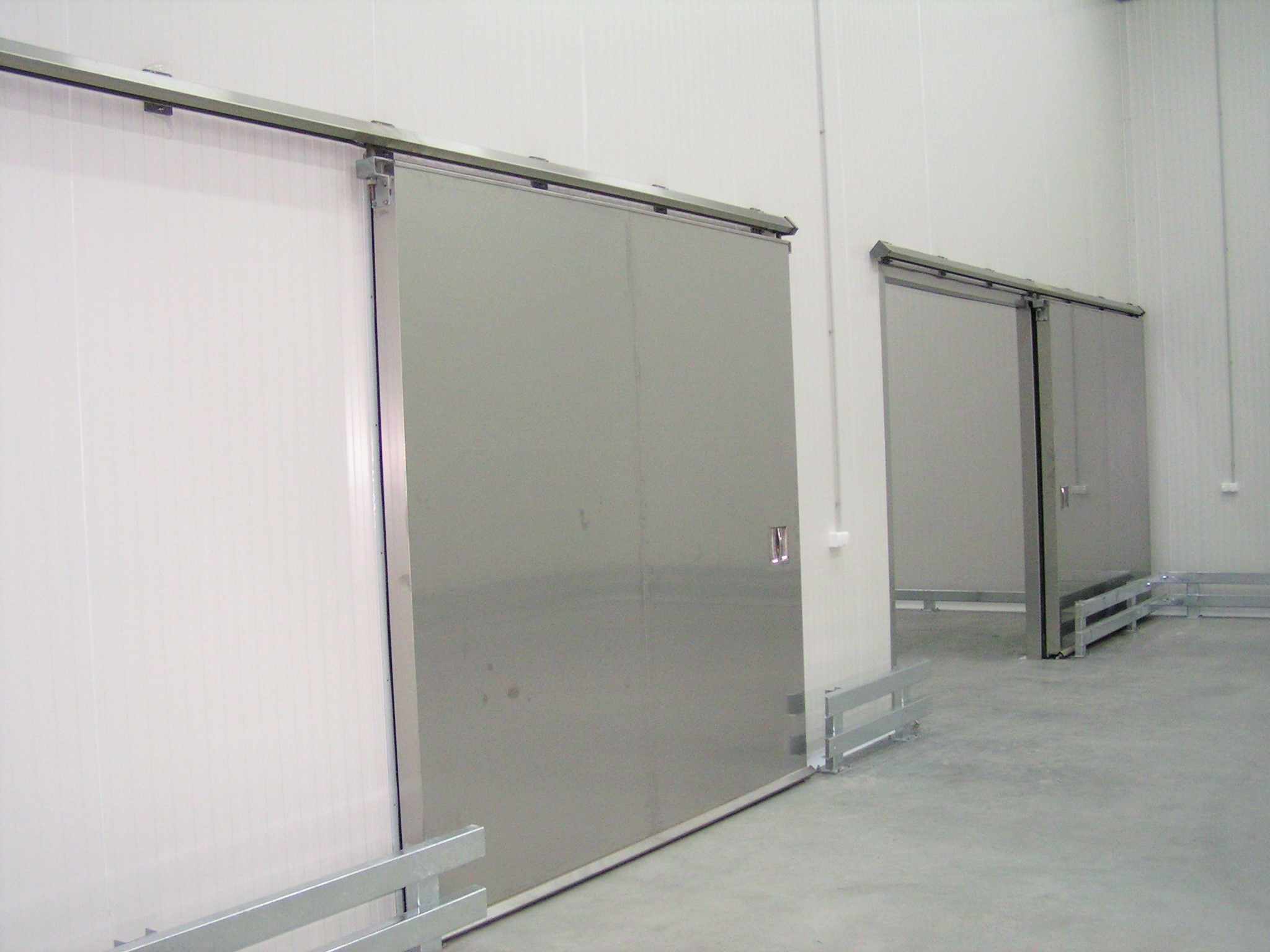
Protection against frost
A freezer door is not just a "thicker door". It's a complete system to minimize heat loss.
Active heating (230V)
The 230V special heating cable system built into the frame and threshold keeps the sealing zone warm. This prevents condensation from freezing onto the frame, the rubber seal is not damaged, and the door remains easily openable under all conditions.
Heated system100-140mm insulation
Compared to normal cold storage doors, it is made with an extra thick, high-density polyurethane panel. A better U-value means less heat loss, reducing the mechanical load and operating costs.
Energy efficientHinged or sliding?
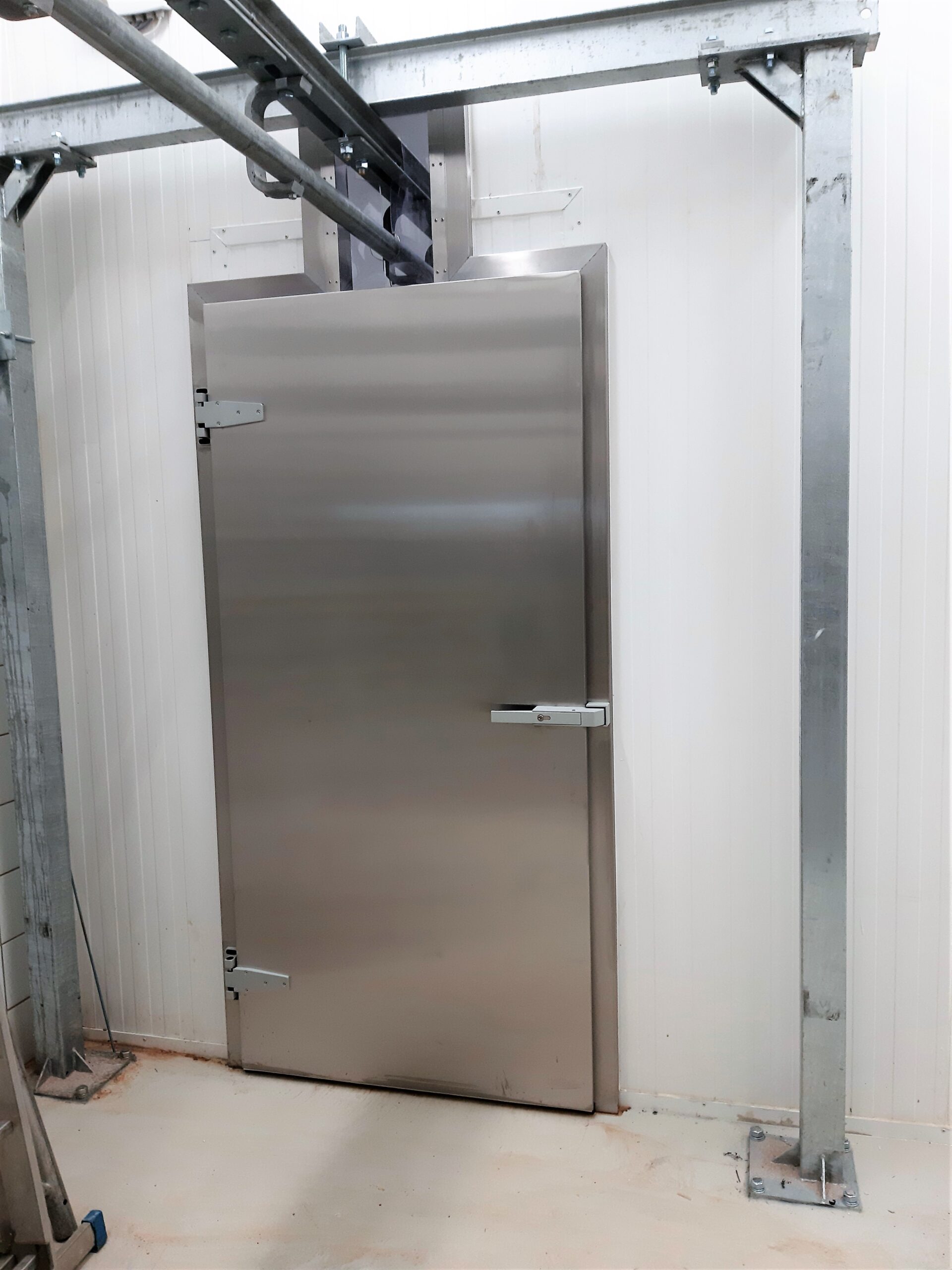
For personnel traffic. 100mm thick panel, with heated frame and rising hinge. Also available in a double-leaf version.
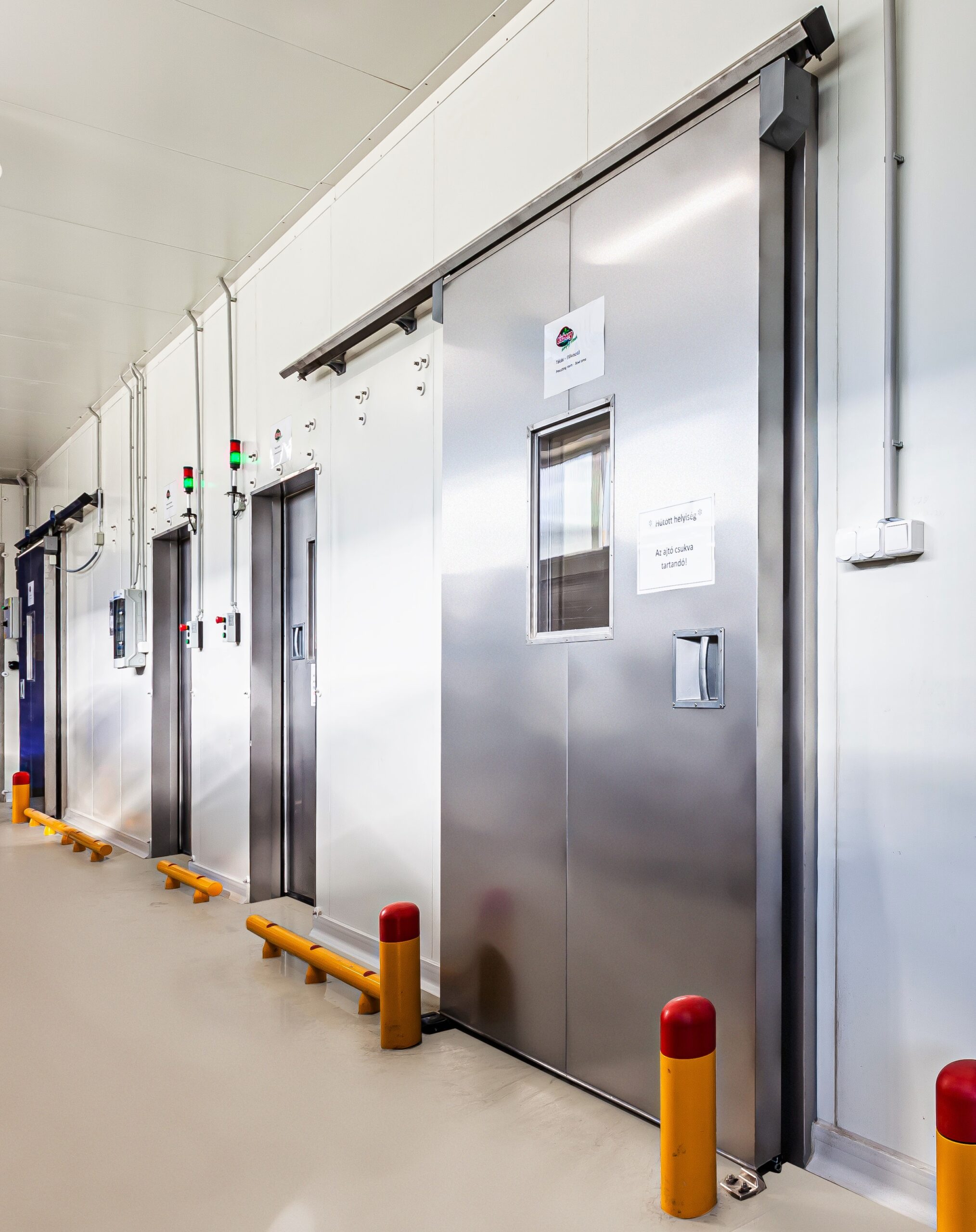
For forklift traffic. 120mm thick panel. Installed with a heated threshold recessed into the floor.
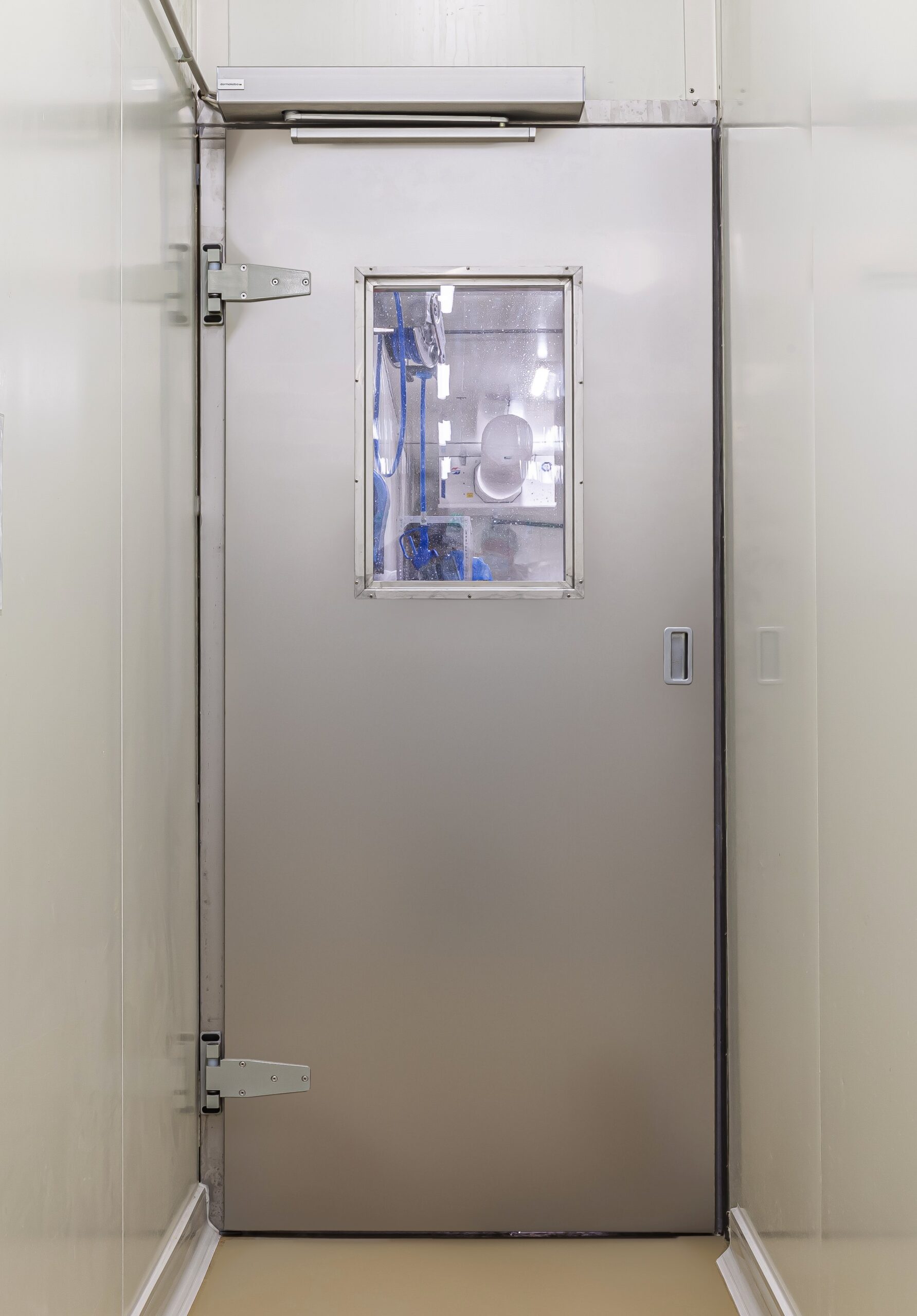
For the fastest opening and closing. Minimizes open time, so less warm air enters.
Detailed technical content
Thermal bridge-free structure
The door leaf and the frame are made with a thermal break design: we reduce heat conduction between the cold and warm sides with composite interruptions. Thanks to this, condensation is moderated, and the risk of external surface icing is significantly reduced.
Double EPDM sealing
For freezer sliding doors, we use a double-row, cold-tolerant EPDM (silicone upon request) seal. The special material remains flexible down to -30°C, so it does not harden and maintains a stable airtight seal over the long term.
Life-safety lock
For all doors opening into spaces below -18°C, a life-safety emergency release function is mandatory. Our locks are made with an internal emergency release, so the room can be immediately opened from the inside even if the door is locked from the outside.
Heated threshold design
To prevent freezing, the heating wire is placed in a threshold element recessed into the floor or, if necessary, embedded in the concrete. Thus, the floor does not freeze through along the line of the door, ice formation is reduced, and closing remains reliable in the long term.
Frequently asked questions
How much electricity does the heated frame system consume?
The consumption of self-regulating heating cables is typically low, and they only work more intensively to the extent necessary. This energy demand is dwarfed by the consumption of the entire deep-freeze system, while playing a key role in preventing the door from freezing to the frame.
Is it necessary to concrete or recess the threshold?
For freezer sliding doors and under heavy use, yes, the heated threshold element must typically be recessed into the floor. This ensures proper closing, protection against freezing, and safe material handling.
Why is heating needed in a freezer door?
Because condensation would quickly freeze onto the door where the frame and seal meet. The heated frame and threshold prevent this, so the door remains easy to open in the long run, and the seals are not damaged.
What temperature is this design recommended for?
Freezer doors are typically designed for operating environments between -18°C and -25°C, but the exact technical content is always determined based on actual use, the number of opening cycles, and the installation location.
Can it be ordered with automatic operation?
Yes, freezer doors can also be made in an automatic version. This is particularly advantageous where forklift or intensive industrial traffic is frequent, as it allows for faster opening and closing, and reduces heat loss resulting from open time.
Is the internal emergency release mandatory?
Yes, in the case of deep-freeze spaces, this is a fundamental safety requirement. The internal emergency release ensures that the door can be opened immediately from the inside even if it is locked from the outside.