Hygiene and acid resistance in industrial environments
HACCP and GMP compatible stainless steel doors for slaughterhouses, production plants, commercial kitchens and cleanrooms. Easy-to-clean, chemical-resistant surfaces.
Choose a solution
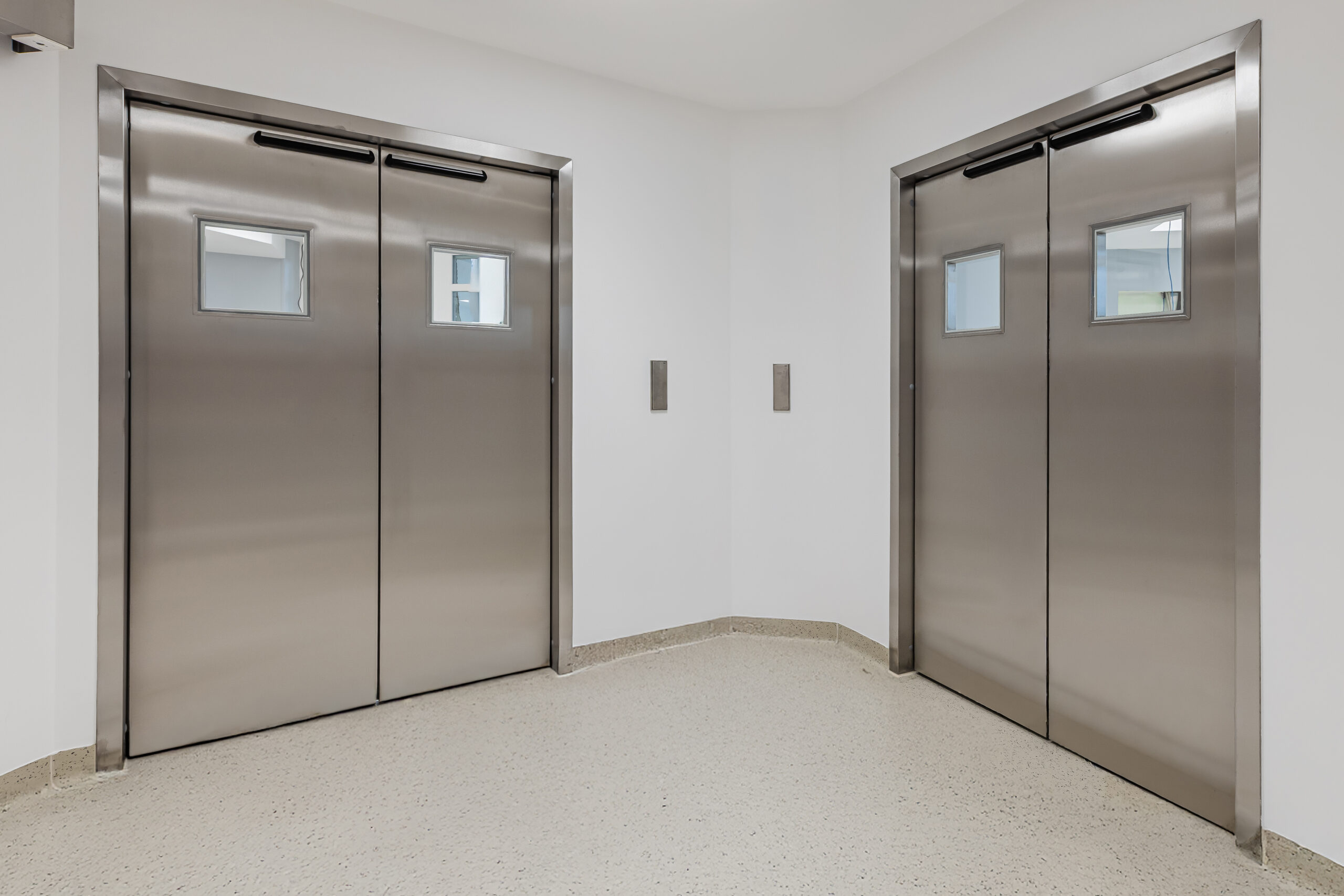
Industrial stainless steel swing doors
Fast passage in production corridors, built for heavy traffic. No hand use required.
Standard SolutionIndustrial stainless steel hinged doors
Standard industrial doors for separating offices, changing rooms and processing areas.
Space SavingIndustrial stainless steel sliding doors
Space-saving non-coldroom design for closing off warehouses and corridors.
Noise ReductionSound-insulated stainless steel doors
For noisy production zones and office separation. Standard design provides 27–34 dB, and with a thicker door leaf up to 40 dB sound reduction is possible.
For Climate-Controlled AreasThermally insulated stainless steel doors
For climate-controlled or heated spaces, and also for outdoor use. Energy-saving seals and a stable structure.
Where cleanliness matters most
In the food industry, bacterial build-up is the biggest risk. Once traditional painted doors are damaged, corrosion and contamination can begin quickly, creating hygiene problems.
AISI 304 and 316L (acid-resistant): Our doors are made entirely of stainless steel – including the door leaf, the frame and the main fittings. The surface resists acidic cleaning chemicals, blood, salty moisture and even high-pressure washing.
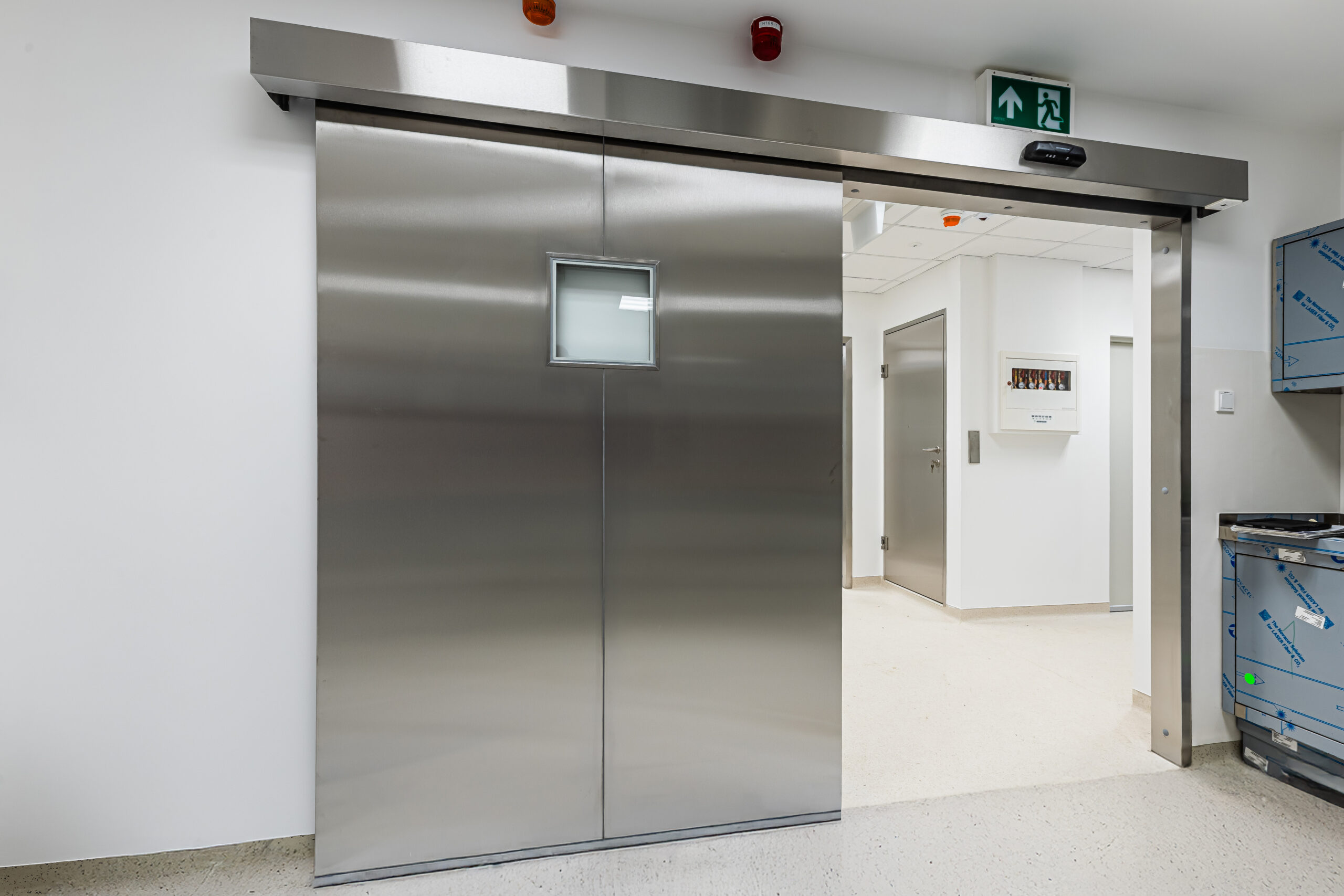
Compliance during inspections
Flush surfaces
During the design process we avoided protruding edges and corners that are hard to clean. The construction of the door leaves and frames does not allow dust or water to collect.
Easy to washChemical-resistant EPDM
The rubber seals are made from a special material that does not crack even under aggressive disinfectants.
Long service lifeStainless steel designs for production environments
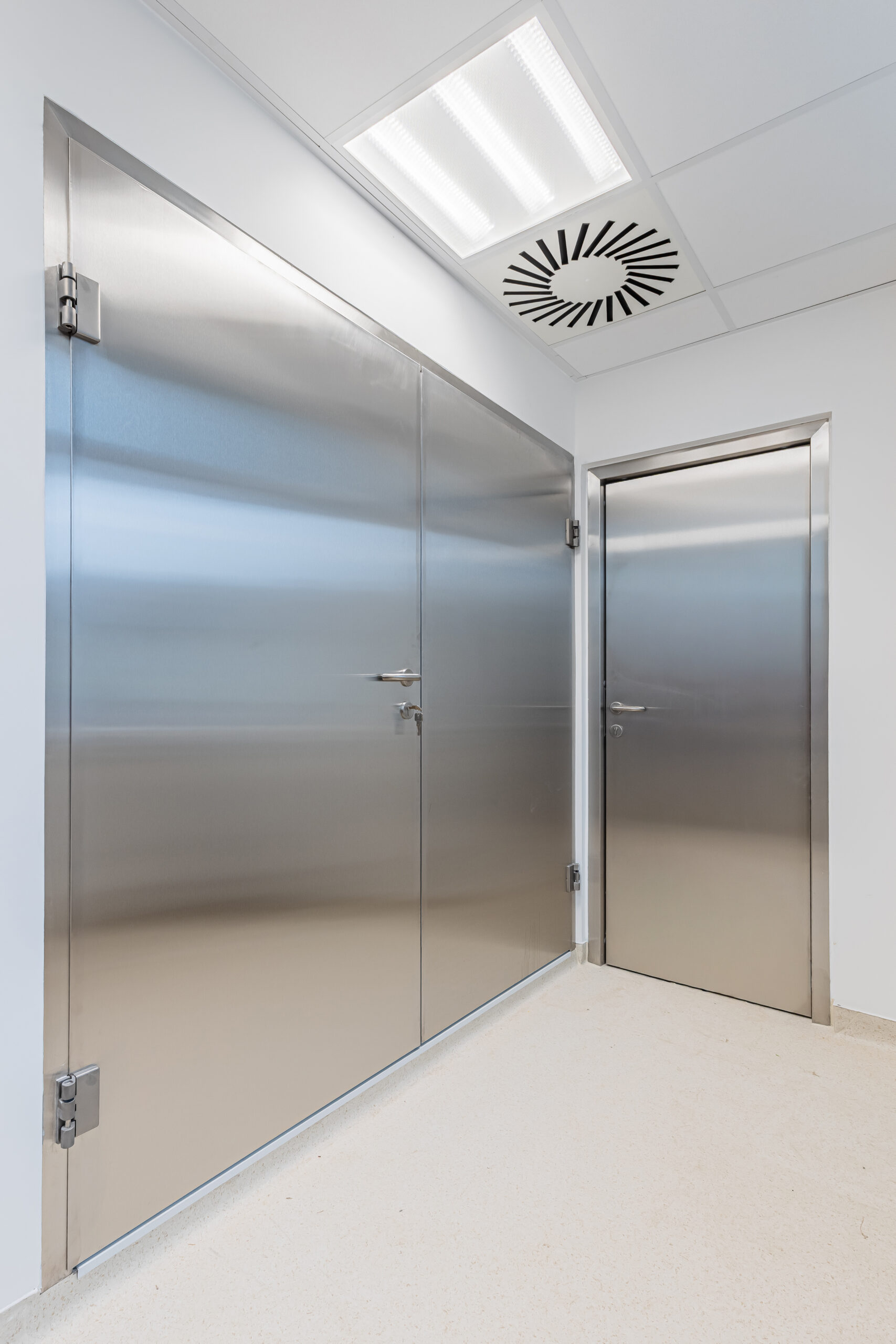
The stainless steel finish is not only durable, but also easy to inspect from a hygiene standpoint and simple to keep clean.
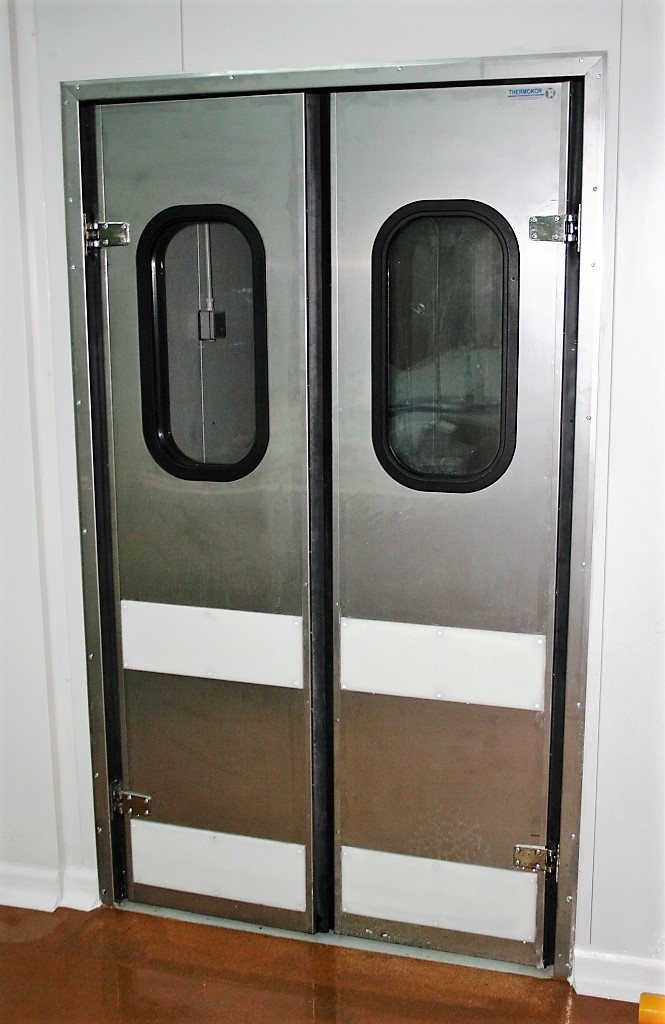
When separating different production zones, it is essential that the door is durable, fast to use and easy to clean at the same time.
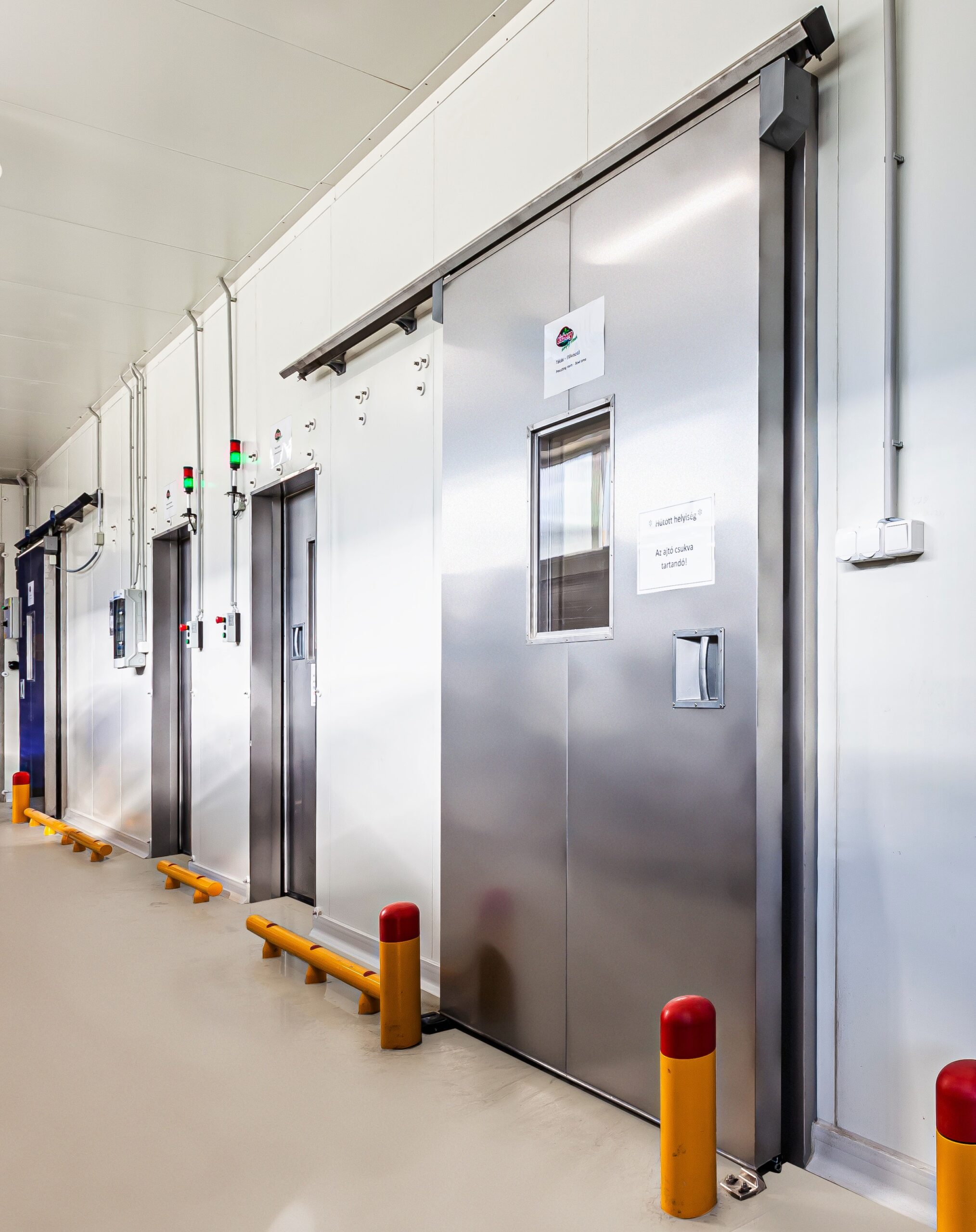
The sliding design is ideal where every square centimetre matters in production corridors or loading areas.
Not every stainless steel door is the same
The material grade, surface finish, seals and fittings must always be selected according to the actual technology and environment. A slaughterhouse, dairy plant, central kitchen or pharmaceutical area all require something different.
That is why choosing the right door is not only about size, but also about the cleaning method, chemical exposure, humidity and the intensity of daily use.
What should be clarified in advance?
Cleaning frequency
There is a big difference between daily wet wiping and regular high-pressure washing. This affects the surface, the seals and the hardware.
Chemical exposure
Salty, acidic or chlorine-rich environments may require a different material choice in the long run, so knowing the real operating conditions is essential.
Type of traffic
Manual pedestrian traffic, trolley movement and intensive goods handling all require different door types. The correct choice also makes operation easier.
Questions when choosing an industrial door
When should AISI 316L (acid-resistant) be selected?
If salt (brine), chlorine or strong acidic cleaning agents are present in the environment, such as in dairy plants, cheese production or salted slaughterhouse areas, then 304 stainless steel may become susceptible to pitting corrosion. In such places, 316L acid-resistant steel is the safe choice.
How soundproof are the doors?
Standard industrial doors usually provide 27–34 dB sound reduction. On request, a special acoustic version can be supplied which, with a thicker multilayer core, can reach up to 40 dB noise reduction.
Which surface finish is recommended?
Brushed stainless steel is a proven solution in most industrial environments because it is attractive, easy to clean and makes minor signs of use less visible.
Can it be installed in a plasterboard wall?
Yes. With face-mounted designs or C-profile frames built into the opening, the doors can be securely fixed to plasterboard and lightweight partition walls as well. Wall thicknesses up to 200 mm can be accommodated.
Can it be washed with a high-pressure cleaner?
Yes, the stainless steel surfaces of both the frame and door leaf can withstand steam and high-pressure cleaning, which is a basic requirement in the food industry. The seals of the fittings should not be hit directly by the water jet.
Can it be ordered in custom sizes and with glazing?
Yes, our stainless steel doors are made to custom sizes and can also be supplied with vision panels, panic hardware, spring closers or special fittings when required.